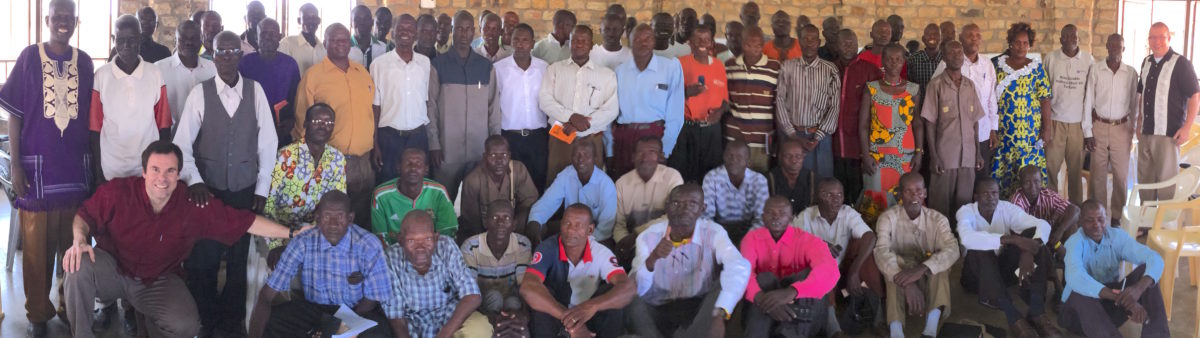
In the last blog, I introduced two very important topics in missions that tie in closely with my work in Pathways Bible Training: Working with indigenous people and taking the Gospel to the unreached. I defined these terms and shared some biblical support for why these issues are important in advancing the Gospel.
In this post, I’d like to share some of the ways we in Pathways are equipping indigenous workers, specifically pastors and ministry leaders. When we first started Pathways about 15 years ago, Al Lewis did some investigation into what was most needed globally to advance the kingdom of God and the cause of missions. Very quickly, he realized that training in how to handle God’s Word well was one of the most significant needs globally. For example, in Africa, 95-97% of pastors have received zero formal training, so they imitate what they hear and see over media and witness from local churches. In India, the vast majority of the population is unreached and has never heard of Jesus Christ and does not know any of what is taught in the Bible. God’s Word is His clearest revelation of Himself for His people, so the world desperately needs to hear the Word, understand the Word, and obey the Word.
Traditionally, western missionaries had received training and then were sent to various parts of the world to learn the language, culture, build relationships, do evangelism, Lord-willing the Spirit would do a work in bringing some to Christ, the missionary would disciple and train them, then eventually hand off the church plant to the local leadership. This whole process took many years, often decades. It was very significant and critically needed, but was a lifelong journey that progressed very slowly.
As God continues His work in growing His church, more and more local indigenous people from various global regions are placing their faith in Christ and becoming involved in the life of the church. Over time, missionaries began to realize that rather than planting churches that looked just like their church back home in western regions (e.g. Dutch Reformed church in Indonesia that looks and sounds just like churches back in Holland. Cf. the “Pilgrim Principle” by Andrew Walls), churches in foreign lands should look, sound, and “feel” like the local culture. Who better to guide this work than those who had grown up in that culture, who knew the language, had long term relationships with locals, and who did not need to transition in their understanding of the local culture and people? They just needed the equipping to take biblical truths and “translate” them for the local folks. The danger with the indigenous movement is that it is possible to lose sight of the fundamentals of the faith, to be so consumed with cultural contextualization that the core truths of the Gospel are eclipsed by what feels comfortable to the indigenous people. This is why equipping in God’s Word is so vitally important. We all need an absolute point of reference, a “true north” on our compass, that we can refer back to.
In Pathways, we started working with indigenous pastors and ministry leaders who were already pastoring churches in eastern Kenya and western India. We asked lots of questions, learned together, and developed training that would equip local leaders in the fundamental skills they would need to handle God’s Word well (2 Timothy 2:15). Then they could take and modestly adjust that training, utilizing local dialects, familiar illustrations, and tap into nearby relationships to multiply the training to many others in their region. Over the years, we have continued to learn, to refine our material to fit better with indigenous workers in the Global South (the least reached region of the earth), to build relationships with local leaders, and to spread healthy principles for Bible study and teaching in a wide variety of diverse cultures. We don’t have all the answers, but we are willing to stop and ask questions of our indigenous brothers and sisters, offering what we can to help them. Then we watch as God uses them and us to light fires of Gospel movements, churches, and ministries founded upon the Word, whether it relates to solid biblical preaching, evangelism, discipleship, church planting, counseling, leadership development, community development, and all the other aspects of the church that flow from a healthy understanding of the Word.
There is certainly still a place for the western missionary to go to locations where the Gospel is foreign, and engage in the long process to plant healthy churches. This is what our son Adam and his wife Sofia will be doing. But the more we can work with indigenous local leaders, equipping them with what they need to plant and grow these churches, advancement of the kingdom will occur more rapidly and in a more natural looking and feeling way for people globally.